Telemetry note 01 · deceleration

Mark the Moment to Slow

Braking is a phase, not a pin on the track map. Compare where deceleration begins, how pressure builds, and how cleanly the brake is released as the car turns.

Read the whole trace

Start with a comparable corner

Choose one corner and two clean laps in the same car, conditions, and fuel state where possible. Align the traces by distance or a recognizable track landmark. Then look for the first clear deceleration, not merely the first visible foot movement. Small pedal noise is not necessarily a meaningful braking event.

Note the approach speed and whether the car is settled. If one lap arrives faster, the same marker can produce a different result. Record what is different before deciding the braking point itself is wrong.
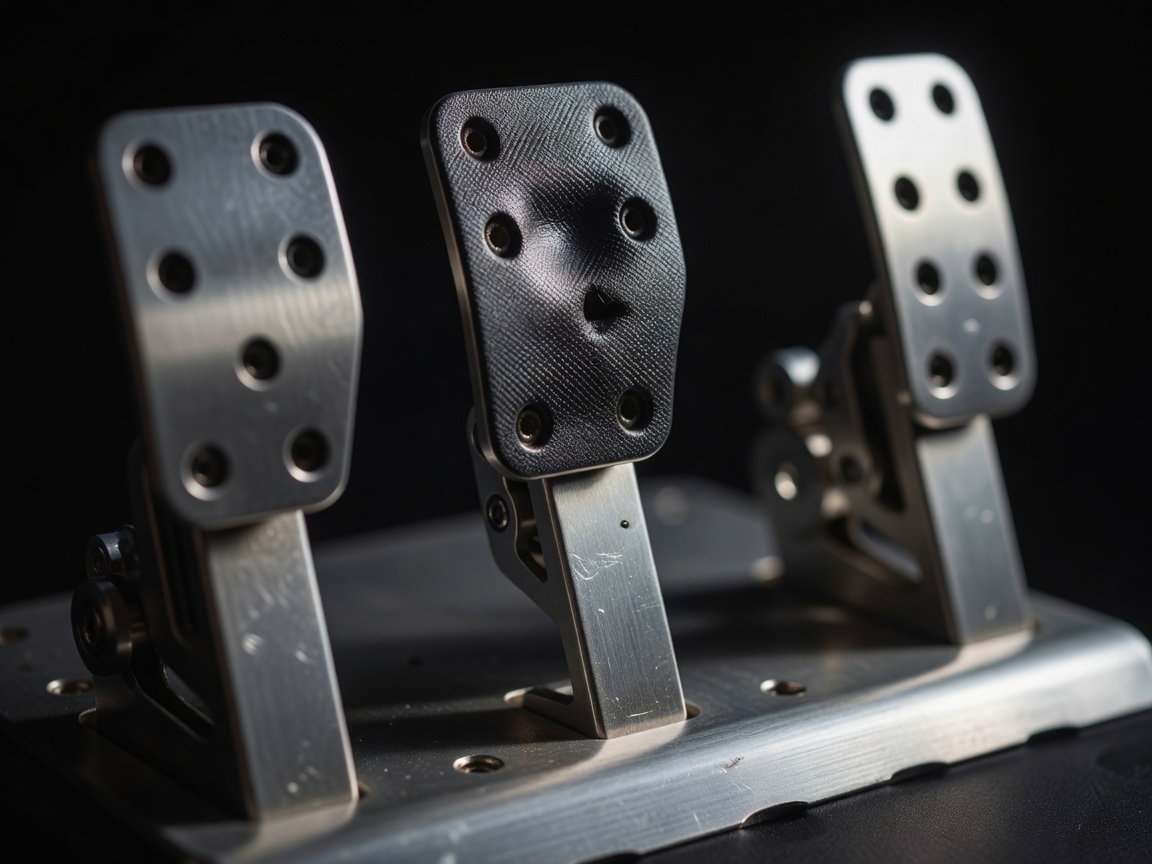

Close-up of sim racing pedals showing the brake pedal used to examine pressure application
Build, hold, release

Separate the three brake questions

First, compare onset: is the initial application early, late, abrupt, or progressive? Second, inspect pressure: does the driver reach a useful peak and hold it, or does the trace pulse as the car becomes unsettled? Third, study release: does pressure taper as steering load rises, or does the brake come off in a sharp step?

These phases interact. A late, hard application may look fast on a trace but can force a compromised release and slow rotation. Trail braking is not simply keeping the pedal down longer; the release must fit the corner and the car’s balance.

Sim racer’s hands holding a steady steering angle while approaching a braking zone

Compare before moving the marker

Use the table as a short diagnostic sequence. Choose one observation to test in the next run and leave setup alone until the driving evidence is repeatable.

What you seePossible questionNext comparison
Deceleration begins at different distancesAre approach speed or reference points changing?Compare two clean approaches and visible landmarks.
Pressure trace has a sharp spikeIs the initial input abrupt or is grip changing?Check the same point across several laps.
Brake release ends before turn-inIs the car coasting or is that intentional?Compare minimum speed and steering onset.
Brake remains high as steering risesDoes the front feel loaded or wash wide?Test a smoother release, keeping other inputs steady.

Make the next run useful

Write down the corner, the braking difference you observed, and the driving change you will test. Use the same view and measurement on the next run. If the result improves once but cannot be repeated, keep investigating rather than treating it as a settled gain.

Continue to Racing Lines
Log this pair

Reference: clean lap and corner
Evidence: onset, pressure, release
Test: one input change